

 ホーム /
ホーム / AGVロボット用のカスタム48V 30Ah LiFePO4バッテリーパック


目次
- Why LiFePO4 Is Suitable for Industrial AGVs
- Understanding the 48V 30Ah Specification
- The BMS Must Match the AGV Load
- Charging Strategy Affects Battery Design
- Mechanical Construction for Industrial Operation
- Customization for Different AGV Platforms
- Quality Control Before Delivery
- A Battery Designed Around the AGV
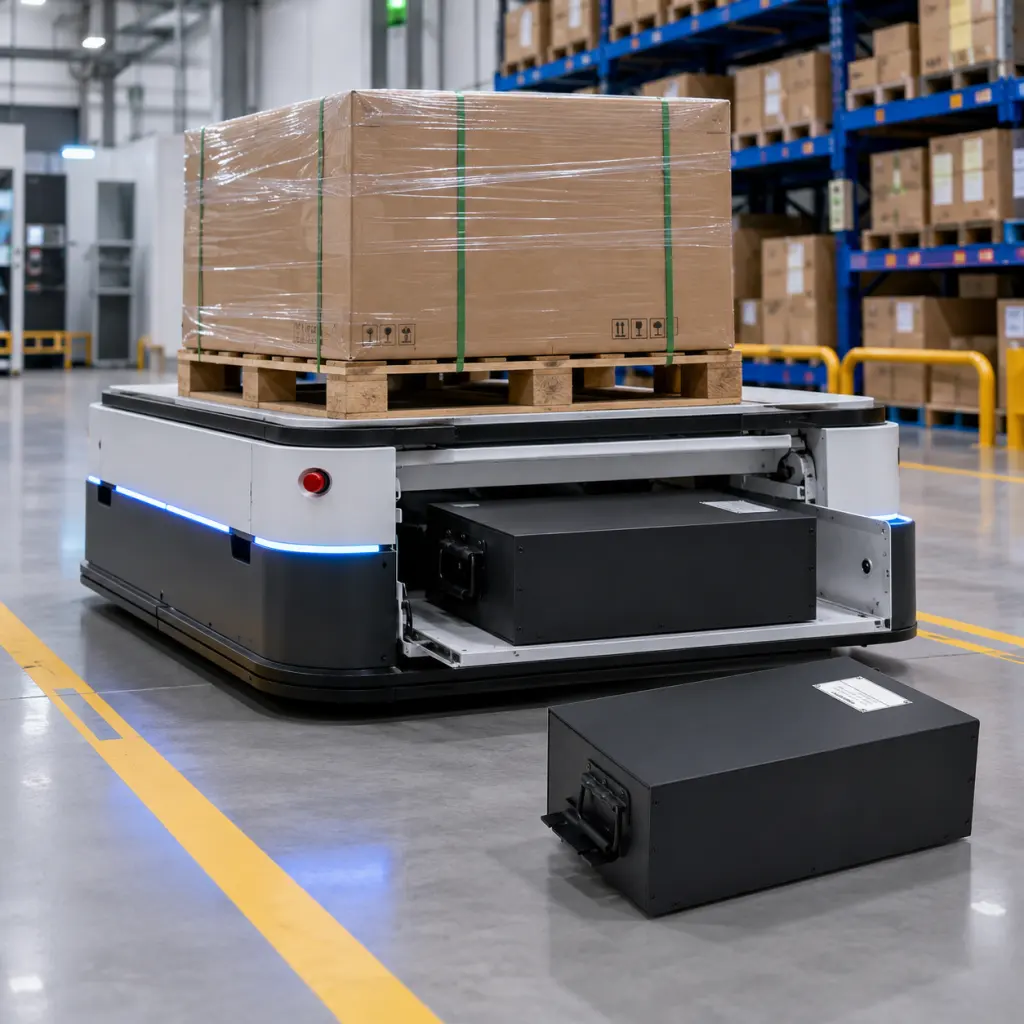
Industrial AGVs rarely operate under a perfectly steady load. They accelerate, stop, turn, lift materials, wait at stations, and communicate with warehouse control systems throughout the day. Each action changes the power demand placed on the battery.
A 48V 30Ah LiFePO4 battery pack for industrial AGV robots is designed to support this type of repeated operation. It combines lithium iron phosphate chemistry, a protective battery management system, and a customizable mechanical structure to provide dependable power for automated material-handling equipment.
However, voltage and capacity are only the beginning of a correct battery specification. The battery must also match the AGV’s current demand, working schedule, charging method, installation space, communication system, and operating environment.
Why LiFePO4 Is Suitable for Industrial AGVs
Lithium iron phosphate batteries are widely considered for industrial mobile equipment because they offer good thermal stability, a long service life, and stable discharge performance.
An AGV fleet may complete several charging and discharging cycles over a relatively short period, especially when vehicles use opportunity charging between tasks. A battery chemistry designed for repeated cycling can help reduce replacement frequency and keep the fleet available for longer periods.
LiFePO4 cells also maintain a relatively stable voltage during much of the discharge process. This helps motors, controllers, sensors, scanners, and communication devices receive more consistent power as the battery’s state of charge decreases.
Actual battery life still depends on cell quality, discharge depth, charging current, working temperature, BMS settings, and maintenance practices. The battery should therefore be designed around the real operating pattern rather than selected from capacity alone.
Understanding the 48V 30Ah Specification
A 48V 30Ah battery stores approximately 1.44kWh of nominal energy. The usable operating time depends on the AGV’s average power consumption and the amount of energy reserved by the control system.
A light-duty AGV moving small cartons across a smooth warehouse floor may run much longer than a vehicle carrying heavy components or operating a hydraulic lifting platform. Frequent acceleration, ramps, rough flooring, high speed, and low-temperature operation can also increase energy consumption.
Before confirming a 48V 30Ah battery, the equipment manufacturer should provide:
- 平均運転電流
- 最大連続電流
- Motor startup or peak current
- Required runtime per charge
- Maximum charging time
- Auxiliary electrical loads
- バッテリー区画寸法
- Expected operating temperature
These details allow the battery manufacturer to select suitable cells, conductors, connectors, fuses, and BMS current ratings.
The BMS Must Match the AGV Load
A built-in battery management system protects the battery during charging and discharging. Typical protection functions include overcharge, over-discharge, overcurrent, short circuit, and abnormal-temperature protection.
For an industrial AGV, correct current selection is especially important. Motors may draw a brief surge when the vehicle starts, changes direction, climbs a slope, or lifts a load. A BMS with an insufficient peak-current rating may disconnect the battery even though the AGV is operating normally.
The BMS should therefore be selected according to both continuous and peak current. Protection thresholds must prevent unsafe operation without causing unnecessary shutdowns during normal work.
For intelligent AGVs, the BMS may also provide battery data through communication interfaces such as CAN or RS485. Depending on the system design, the vehicle controller may monitor voltage, current, temperature, state of charge, remaining capacity, cycle information, and fault status.
This data can help fleet managers schedule charging and identify abnormal batteries before they interrupt production.
Charging Strategy Affects Battery Design
AGVs may use manual charging, automatic docking, opportunity charging, or removable battery modules. Each charging strategy creates different design requirements.
An AGV that charges overnight may prioritize a moderate charging current and maximum battery longevity. A vehicle that docks briefly between transport tasks may require a higher charging current so it can recover useful energy within a short stop.
Automatic charging also requires accurate alignment between the AGV and charging station. The charging connector, contact design, BMS communication, and charger output must work together.
The charger must match the LiFePO4 battery’s series configuration, maximum charging voltage, and permitted charging current. Using a charger designed for a different lithium chemistry can lead to incomplete charging, protection activation, or battery damage.
Mechanical Construction for Industrial Operation
Inside an AGV, the battery experiences vibration, acceleration, braking, and occasional impact. It may also operate near motors, motor controllers, or other heat-generating components.
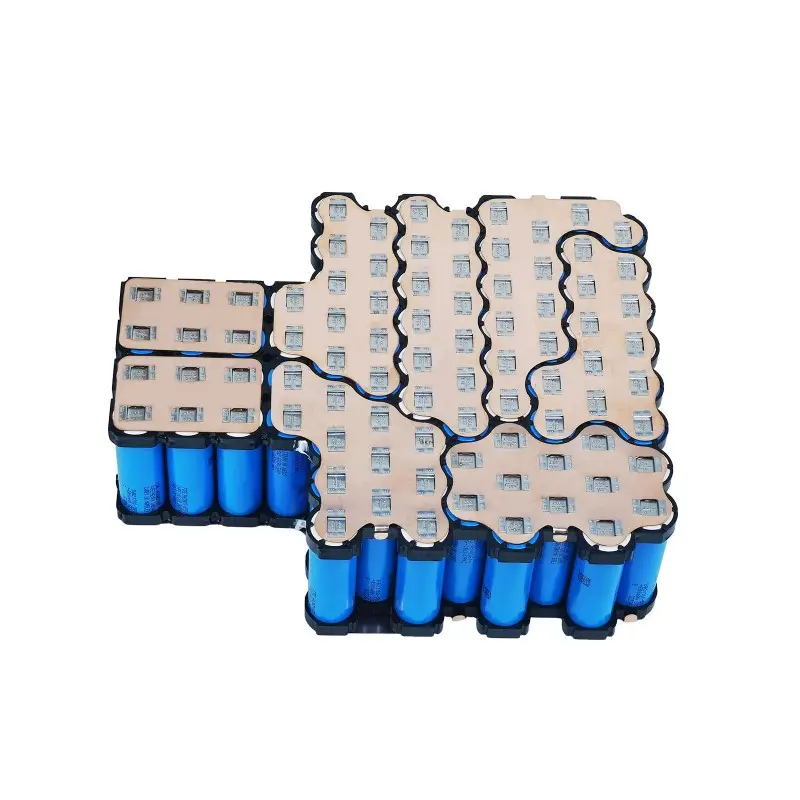
A dependable battery pack requires more than cells placed inside a box. The internal structure should secure the cells, insulate conductive parts, protect welded connections, support the wiring harness, and prevent cables from rubbing against sharp enclosure edges.
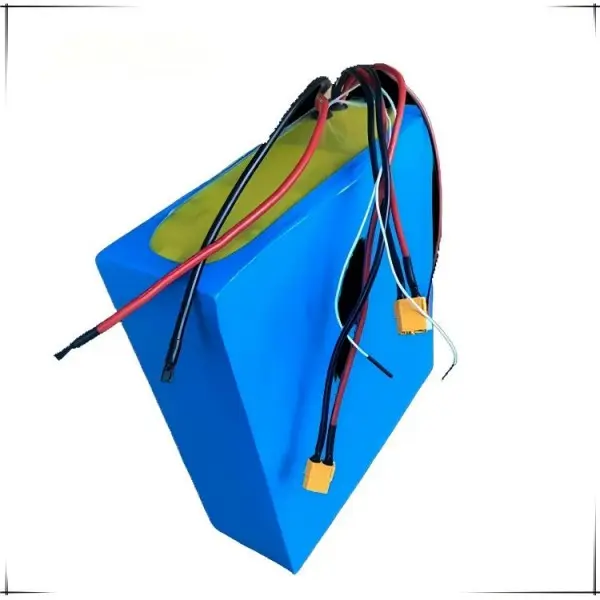
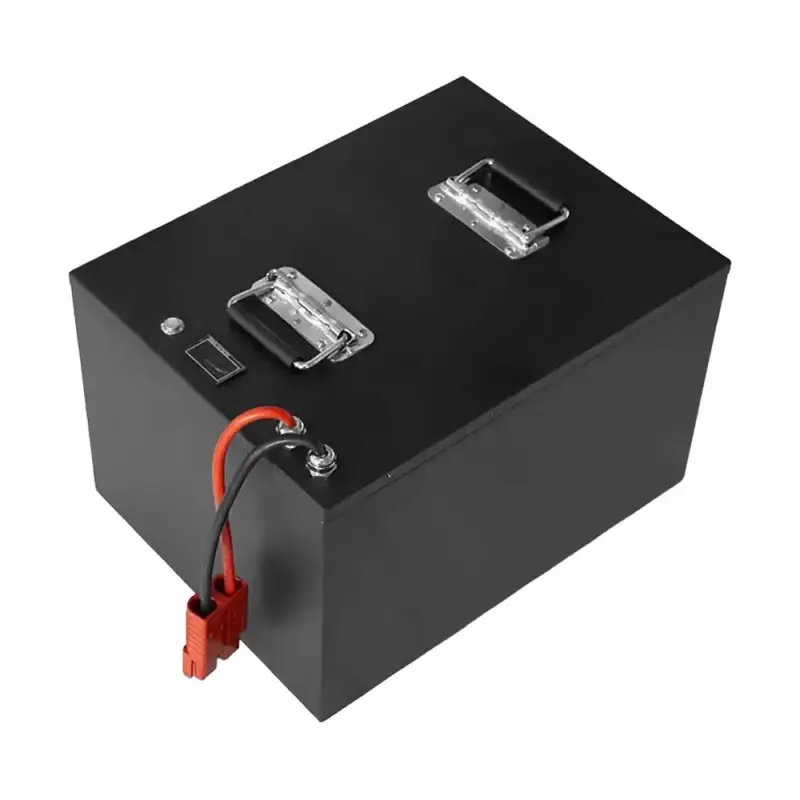
The outer enclosure may be made from metal or engineering plastic, depending on the project. Metal housings can provide strong mechanical protection, while customized plastic structures may help reduce weight and fit complex spaces.
Handles, mounting brackets, guide rails, power connectors, charging ports, switches, fuses, indicators, and communication interfaces can be positioned according to the AGV layout. For removable batteries, the design should make replacement convenient without allowing the pack to move during operation.
Customization for Different AGV Platforms
Industrial AGVs vary greatly in size and function. A compact mobile robot used for warehouse picking does not have the same battery requirements as a heavy-duty AGV transporting machine parts.
OEM customization may include:
- バッテリー電圧と容量
- Continuous and peak discharge current
- Pack dimensions and mounting structure
- Metal or plastic enclosure
- Power and charging connectors
- Cable length and outlet direction
- CAN or RS485 communication
- Charging current and interface
- State-of-charge display
- Branding, labels, and packaging
Custom development should begin before the AGV’s battery compartment and electrical architecture are finalized. Early cooperation between the robot manufacturer and battery supplier can prevent connector mismatch, insufficient current capacity, poor service access, and last-minute enclosure changes.
Quality Control Before Delivery
Industrial batteries should be tested as complete packs rather than evaluated only at the cell level. Production control may include cell sorting, insulation inspection, connection testing, BMS verification, charging and discharging tests, capacity measurement, voltage consistency checks, and final appearance inspection.
Where required by the application, additional vibration, temperature, communication, or enclosure tests can be discussed during development.
Clear production records also support batch traceability. When the AGV manufacturer receives the battery, it should know the pack specification, charger requirements, connector definition, communication settings, and recommended operating limits.
A Battery Designed Around the AGV
A custom 48V 30Ah LiFePO4 battery pack can provide stable and long-lasting power for industrial AGV robots, warehouse vehicles, automated forklifts, and mobile material-handling platforms.
The best results come from treating the battery as part of the complete AGV system. Cell chemistry, current demand, BMS settings, charger compatibility, enclosure design, communication, and working conditions must all be considered together.
When these details are confirmed early, the battery can deliver the required runtime, handle motor peaks, fit the chassis correctly, and support efficient daily fleet operation.