

 ホーム /
ホーム / ロボット、AGV、電動自転車、ポータブルコーヒーメーカー向けの14.8V 14Ah 18650リチウムイオンバッテリーパック


目次
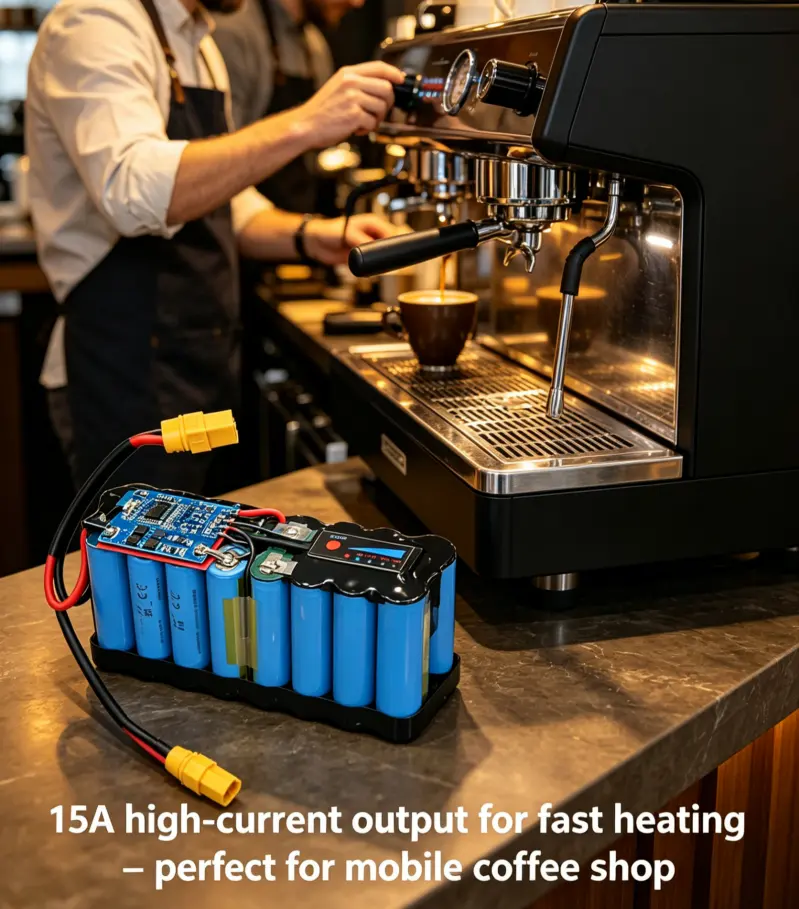
Reliable mobile equipment depends on more than motors, sensors, and control software. The battery must also provide stable output, fit the available installation space, and support repeated charging during daily operation. A 14.8V 14Ah 18650 lithium battery pack offers a practical power solution for compact AGVs, autonomous mobile robots, service robots, inspection equipment, and other mobile industrial systems.
Built with a 4S4P configuration, Grade A 18650 cells, and an integrated battery management system, this rechargeable battery pack balances capacity, compact size, protection, and customization flexibility.
Understanding the 4S4P Battery Configuration
The 4S4P structure means that four groups of cells are connected in series, while four cells are connected in parallel within each group.
The series connection raises the nominal voltage to 14.8V. The parallel connection increases the available capacity to 14Ah and helps the pack deliver the current required by motors, controllers, sensors, communication modules, and other onboard electronics.
This configuration is useful for equipment that needs more operating time than a small consumer battery can provide but does not require the size and weight of a large industrial battery system.
For AGV and robot manufacturers, the battery configuration must match the actual electrical load. Motor starting current, normal running current, peak current, standby consumption, charging method, and expected operating time should all be considered before the final pack design is confirmed.
Why 18650 Cells Are Used in Mobile Equipment
The 18650 cylindrical cell is widely used in rechargeable battery systems because it offers a useful combination of energy density, mechanical stability, availability, and design flexibility.
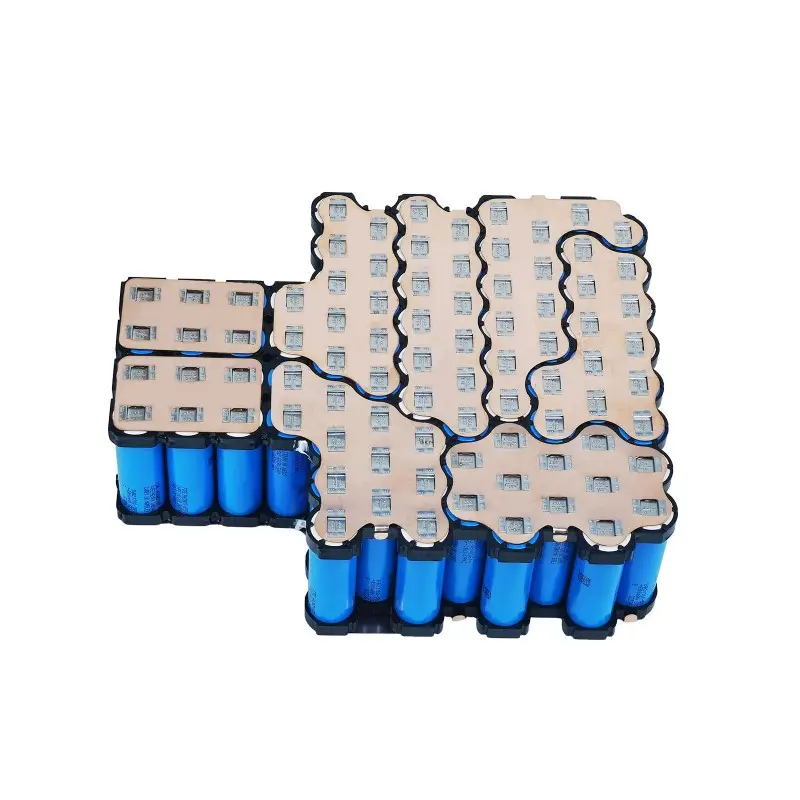
A battery manufacturer can arrange 18650 cells in different series and parallel configurations to achieve the required voltage, capacity, and discharge performance. This makes the format suitable for both standard battery packs and fully customized projects.
Using Grade A cells is especially important for AGVs and robots. Mobile industrial equipment may operate for long periods, experience frequent acceleration and stopping, and undergo regular charging. Cell consistency helps the battery pack maintain more balanced voltage and capacity during operation.
Poorly matched cells can create uneven discharge, reduced usable capacity, and premature protection activation. For this reason, cell sorting and matching are important steps in battery pack production.
内蔵BMS保護
A battery management system is one of the most important parts of a lithium-ion battery pack. It continuously monitors the condition of the cells and helps protect the pack during charging and discharging.
Depending on the customized design, the built-in BMS may provide protection against:
- Overcharge
- Over-discharge
- Overcurrent
- Short circuit
- Abnormal temperature
- Cell voltage imbalance
For an AGV or robot, these protection functions help reduce the risk of damage caused by an unsuitable charger, excessive current demand, wiring problems, or unexpected operating conditions.
The BMS should not be selected only according to the nominal battery voltage. Its continuous discharge current, peak current, charging current, protection thresholds, temperature sensors, and communication requirements must match the equipment.
Some robot projects only require basic protection. Others may need communication functions that allow the controller to read battery voltage, current, temperature, remaining capacity, or fault information.
Suitable for AGVs and Autonomous Mobile Robots
AGVs are commonly used to transport components, cartons, tools, raw materials, and finished products inside factories and warehouses. Their batteries must support predictable operating time and fit within a limited chassis space.
A 14.8V 14Ah battery pack can be used for compact AGVs, light-duty transport platforms, educational AGVs, delivery robots, and specialized material-handling equipment, provided that the electrical requirements are compatible.
For these applications, the battery design should consider more than capacity. The project team should also confirm:
- Maximum motor current
- Average system power consumption
- Required working time per charge
- Available charging time
- バッテリー区画寸法
- コネクタおよびケーブルの要件
- Installation direction
- Indoor or outdoor operating conditions
A well-matched battery can help the AGV complete its assigned route without unnecessary charging interruptions. It can also simplify battery installation, replacement, and maintenance.
Powering Service and Industrial Robots
Robots often combine motors, cameras, sensors, processors, wireless modules, displays, and other electronic components. These loads may not operate at the same time, which creates changing current demand throughout the working cycle.
The 14.8V 14Ah lithium-ion battery pack can be adapted for service robots, inspection robots, patrol robots, cleaning robots, laboratory robots, and small industrial platforms.
For example, a service robot may require long standby time with occasional movement, while an inspection robot may need continuous motor operation and data transmission. A warehouse robot may experience repeated acceleration under load.
These differences affect the required discharge rate, BMS rating, connector type, cable size, and thermal design. A battery designed for one robot should not automatically be used in another without checking the actual load profile.
Compact Design and Installation Flexibility
Space is often limited inside an AGV or robot chassis. The battery may need to fit around motors, control boards, wiring harnesses, sensors, or structural supports.
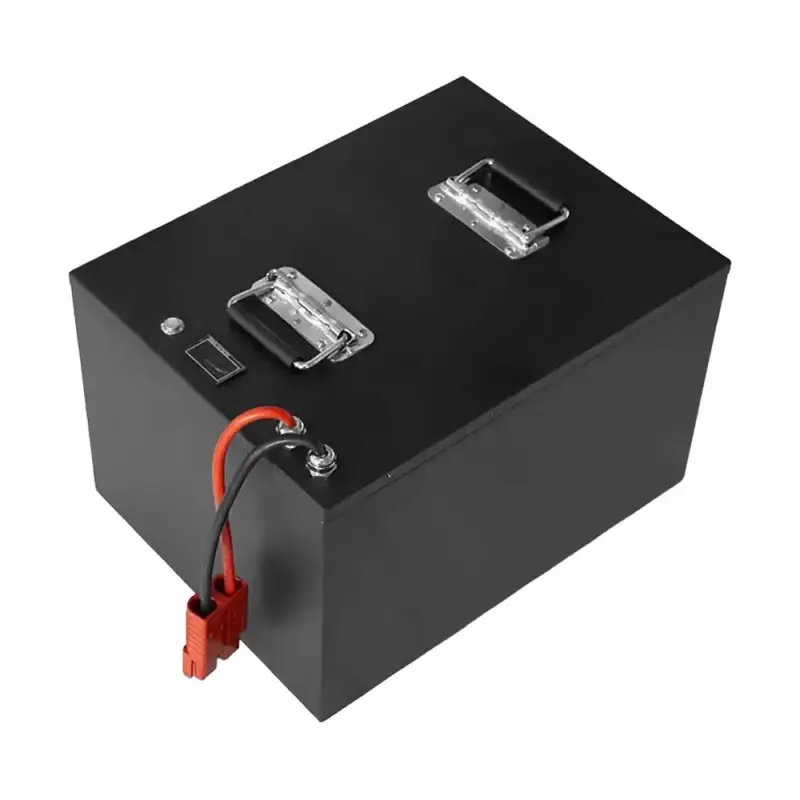
An 18650 battery pack can be arranged in different shapes to suit the available compartment. Depending on the project, the pack may use heat-shrink wrapping, a plastic enclosure, or a metal housing.
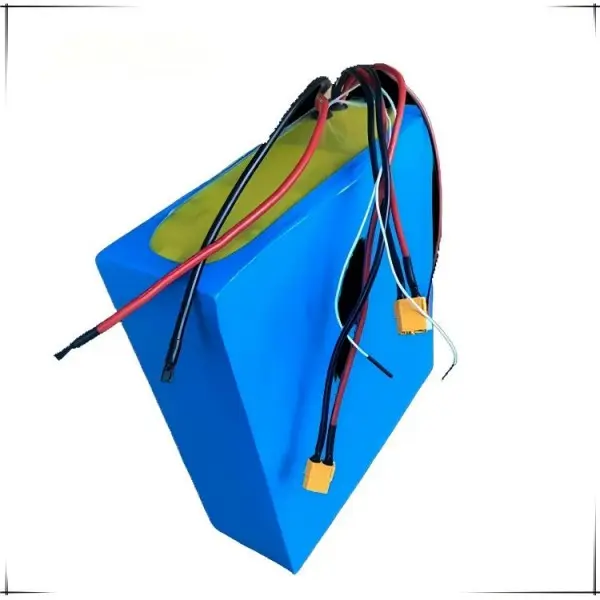
The cable outlet direction, connector position, mounting holes, handles, charging port, fuse, power switch, and communication interface can also be customized.
Good mechanical design is important because the battery may experience vibration, repeated movement, and occasional impact during operation. Internal cell fixing, insulation, welding quality, cable protection, and enclosure strength all contribute to long-term reliability.
OEM Battery Customization
Standard battery packs are convenient, but many AGV and robot projects require a design that matches the product exactly.
OEM and ODM customization may include:
- Battery voltage and capacity
- Pack dimensions and shape
- BMS current and protection settings
- Connector model
- Cable length and wire gauge
- Enclosure material
- 通信プロトコル
- 充電インターフェース
- Label and branding
- Packaging requirements
Before development begins, buyers should provide the equipment voltage, motor power, average current, peak current, required operating time, charging method, installation space, and environmental conditions.
Providing accurate application data helps the battery manufacturer avoid oversizing, insufficient current capability, connector mismatch, or installation problems.
Choosing the Right Battery for the Project
The 14.8V 14Ah 18650 lithium battery pack is a versatile option for AGVs, robots, and other mobile equipment, but successful application depends on correct system matching.
Cell quality, BMS selection, mechanical construction, wiring, charging compatibility, and production testing should all be evaluated together. Capacity alone does not determine whether a battery is suitable.
With Grade A 18650 cells, a 4S4P structure, integrated BMS protection, and flexible OEM options, this battery pack can provide a dependable and adaptable energy solution for manufacturers developing compact automated vehicles and robotic equipment.