

 ホーム /
ホーム / 13300 3.85V Cylindrical Lithium Polymer Battery
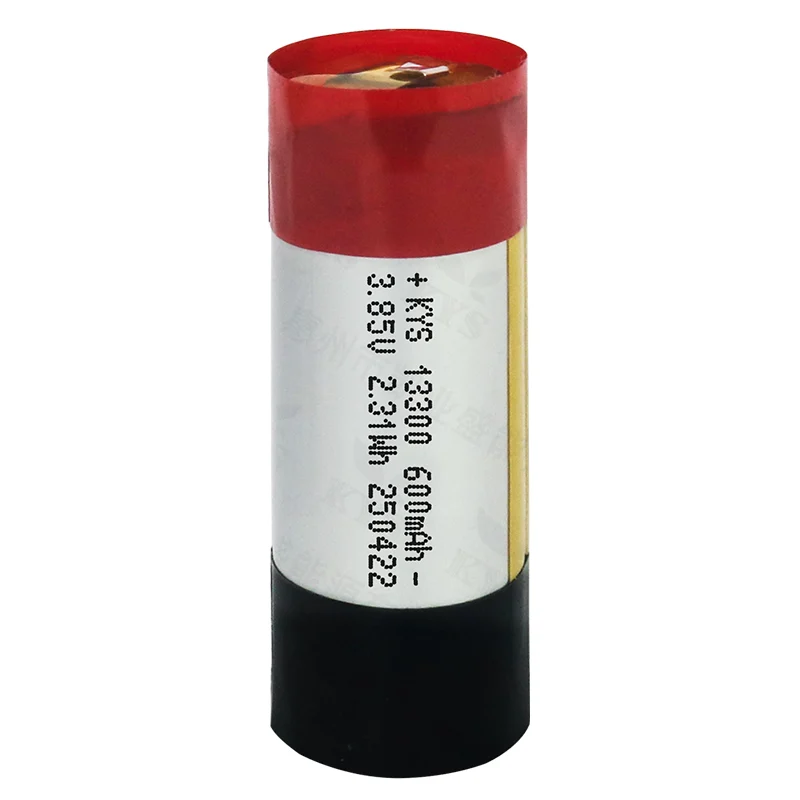
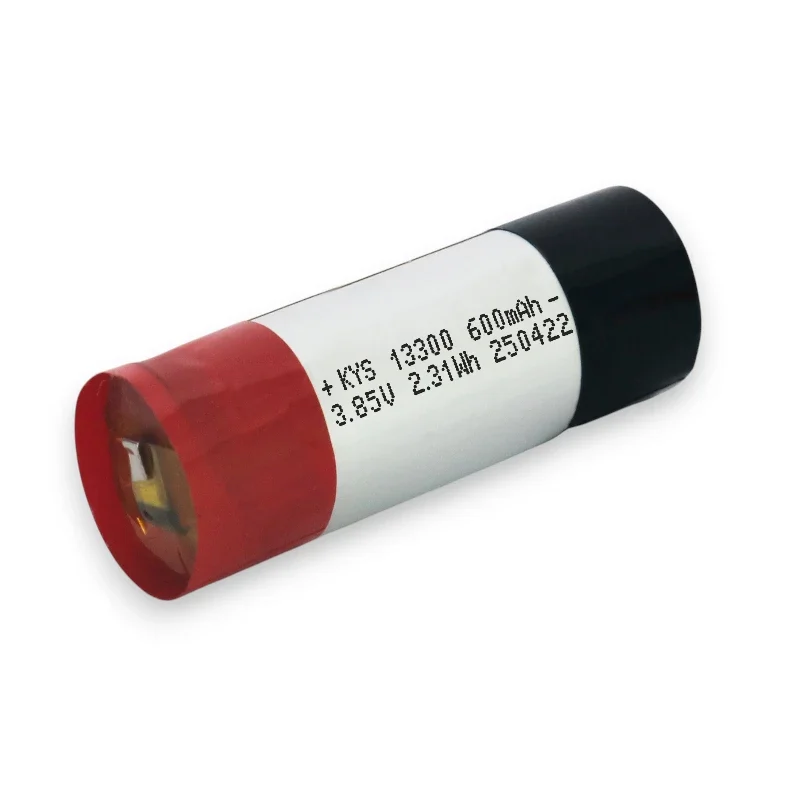
信頼性を重視して設計されたこの13300 3.85Vリチウムバッテリーは、非常に低い自己放電率で安定した600mAhの電力を供給します。携帯型電子機器やカスタマイズされた産業用途に適しており、OEM/ODMオプション(サイズ、配線、保護回路のカスタマイズなど、製品要件に応じて対応)をサポートします。
- Model: KYS 13300
- Cell Size: 13×13×30 mm
- Nominal Voltage: 3.85 V
- Discharge Current: 3 A
- 容量:600mAh
- Internal Resistance: 70 mΩ
- Application Scope: Electronic Products
- Charging Voltage: 4.4 V
 無料見積もりを取得
製品リストに戻る
概要
Cylindrical Lithium Polymer Battery Structure Overview
Engineers construct the cylindrical lithium polymer battery (13300, 3.7V class) using a tightly controlled rolled electrode architecture. First, they align cathode, anode, and separator sheets into a continuous laminate stack, and they wind the structure into a compact spiral core. Meanwhile, they insert the wound element into a precision metal casing and stabilize its internal geometry before sealing preparation begins. After that, technicians secure electrode positioning to maintain uniform layer pressure throughout the cell.
Material System and Electrochemical Components
Manufacturers coat lithium metal oxide active materials onto aluminum foil to form the cathode layer, and they apply graphite-based slurry onto copper foil to build the anode structure. In addition, they introduce a PP/PE multilayer separator to maintain ionic transport while preventing internal contact between electrodes. Furthermore, they prepare an organic carbonate electrolyte containing lithium hexafluorophosphate, and they strictly control moisture content to avoid chemical instability. Meanwhile, the cylindrical shell uses high-strength steel or aluminum alloy to ensure structural rigidity during processing.
Electrode Winding and Assembly Process
Technicians cut electrode sheets into precise strips and feed them into automated winding equipment. Then, they control winding tension and alignment carefully to prevent deformation and uneven layering. After that, they insert the rolled core into the cylindrical housing and connect the bottom terminal through conductive bonding. Subsequently, they install the top cap assembly and apply laser or resistance welding to complete the electrical interface. Meanwhile, they verify dimensional consistency to ensure stable internal compression.
Formation Cycling and Standard Compliance Control
Engineers initiate formation cycling to activate electrochemical reactions and stabilize the solid electrolyte interphase layer inside the cell. Then, they conduct aging tests under regulated temperature conditions to evaluate voltage stability and impedance behavior. Finally, quality teams perform dimensional inspection, internal resistance measurement, and sealing verification. Throughout production, they comply with IEC 62133 and UN38.3 standards, ensuring structural integrity, electrical consistency, and transport safety compliance for cylindrical lithium polymer battery manufacturing.
製品詳細
製品の特徴
- 🛠️ Customizable
Customizable to meet customer requirements - ⚡ High Power
Max. 20C discharge rate available - ⏱️ Long Cycle Life
Meets long-term product usage needs - 🛡️ High Safety
Passed comprehensive safety tests - 🔋 True Rated Capacity
Matches the product design capacity - ⚛️ Multi-Chemistry Options
Covers LCO, NCM, NCA and LFP systems - 🧰 Multi-Protection Mechanism
Built-in protection board with overcharge, overdischarge, overcurrent and short-circuit protection
製品応用分野
This product is suitable for a variety of portable and powered electronic devices, with typical applications including:
-
Personal Care & Health: Electric Toothbrushes, Beauty Devices, Fitness Trackers, Medical Devices
-
Smart Digital & Audio: Headphones, Speakers, Nebulizers, Toys, Lights
-
Financial Payment & Office: POS Machines, USB Tokens, Portable Printers
技術的パラメータ
| モデル | キス13300 |
| セルサイズ | 13(Diameter)×30 mm |
| 放電電流 | 3 A |
| Operating Voltage | 3.85 V |
| 収容人数 | 600 mAh |
| 内部抵抗 | 70 mΩ |
| 加工方法 | 必要に応じてカスタマイズ |
| Application Scope | Electronic Products |
| 充電電圧 | 4.4 V |