

 ホーム /
ホーム / 18250 3.7V大型スーパーキャパシタセル
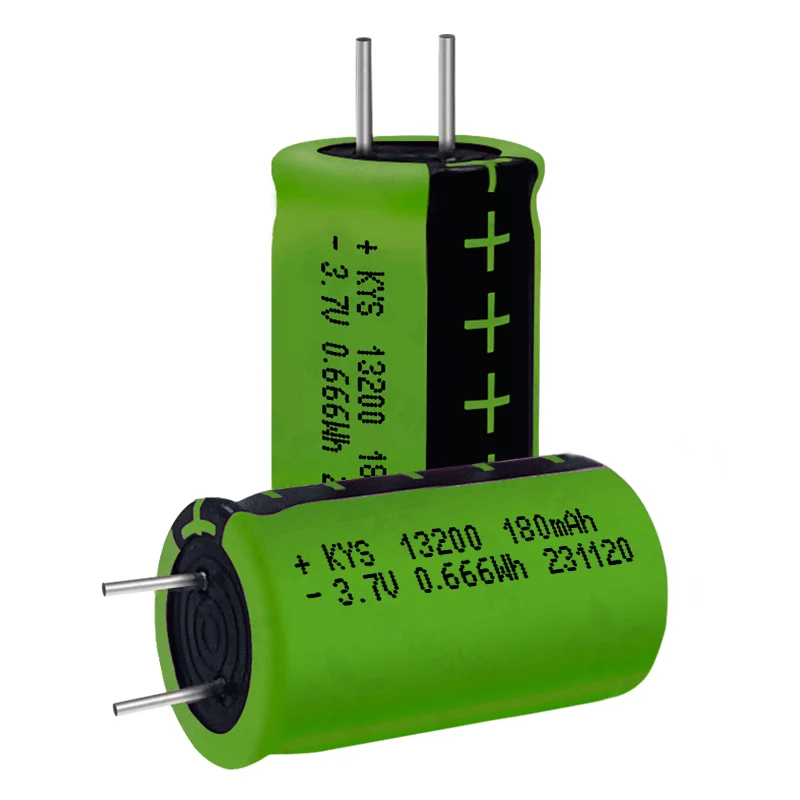
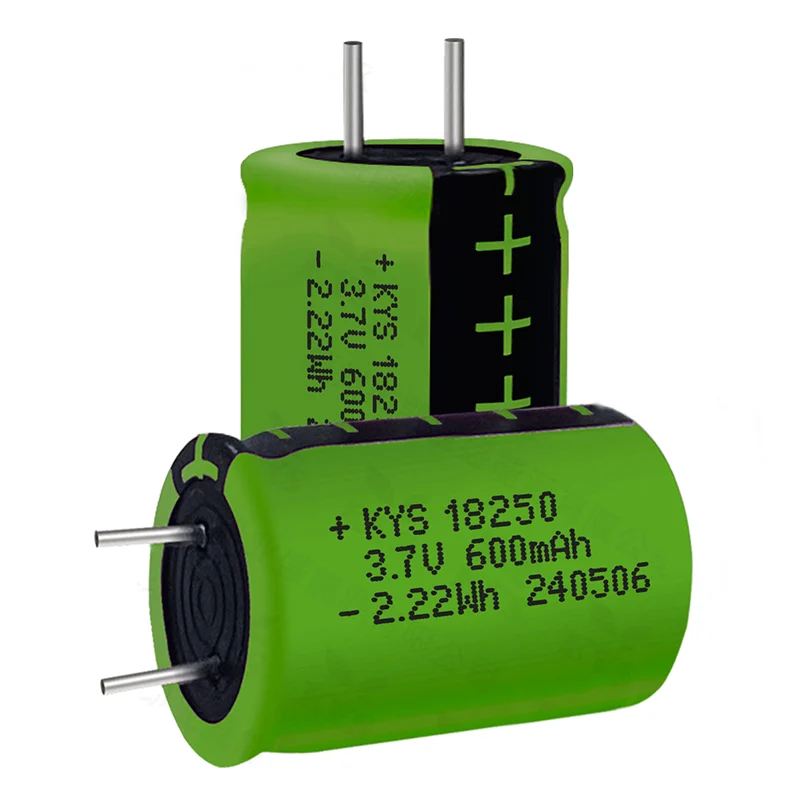
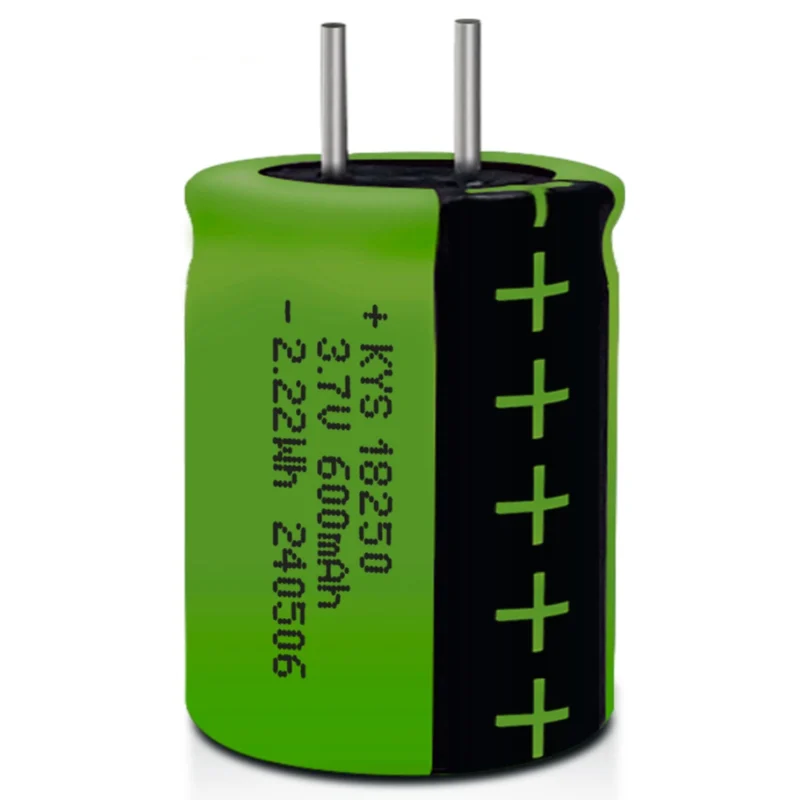
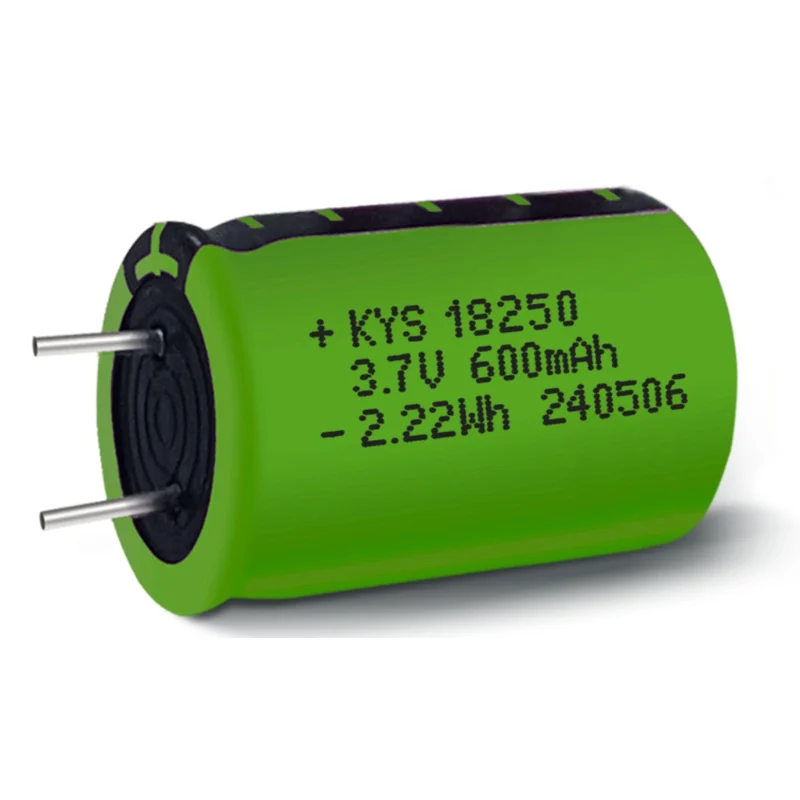
The 18250 3.7V lithium capacitor battery boasts stable voltage output, ultra-low self-discharge and reliable multi-protection safety system. It supports customizable specifications, high 20C discharge rate and long service life, widely matching various portable smart electronic devices.
- Model: 18250 Lithium-Ion Capacitor
- Cell Size: 18(Diameter)×25 mm
- 公称電圧:3.7 V
- 放電電流:3 A
- 容量:600mAh
- 内部抵抗:60 mΩ
- 適用範囲:電子製品
- 充電電圧:4.2V
 無料見積もりを取得
製品リストに戻る
概要
Large Supercapacitor Cells Structural Overview
Engineers construct large supercapacitor cells by organizing electrochemical double-layer structures inside a sealed cylindrical or prismatic enclosure. First, they stack activated carbon electrodes with a high-surface-area separator membrane, and they assemble the layers into a tightly compressed electrode roll or stacked block. Meanwhile, technicians maintain precise pressure control during assembly to ensure uniform pore distribution across the electrode interface. After that, they place the electrode assembly into a rigid metal housing and stabilize mechanical alignment before electrolyte filling begins.
Electrode Material System and Ionic Medium
Manufacturers prepare electrodes using porous activated carbon mixed with conductive carbon additives and polymer binders, and they coat this mixture onto aluminum current collectors. In addition, they introduce an organic electrolyte system containing quaternary ammonium salts dissolved in carbonate solvents, enabling rapid ionic movement across the porous network. Furthermore, they incorporate microporous separator films to prevent internal short circuits while maintaining ion diffusion pathways. Meanwhile, the enclosure uses aluminum or steel casing materials to preserve structural integrity under repeated charge-discharge stress cycles.
Cell Fabrication and Assembly Process
Technicians begin electrode production by dispersing carbon powder, conductive agents, and binder systems into a uniform slurry, and they apply this slurry onto metal foils using precision coating lines. Then, they dry the coated electrodes under controlled thermal conditions to remove residual solvents. After that, they compress the electrode layers through calendaring to optimize density and surface uniformity. Subsequently, they cut and assemble the electrodes into cylindrical or stacked configurations and wind or press them into a compact core structure. Meanwhile, they install current collectors and terminal interfaces using resistance welding or mechanical compression bonding.
Formation Testing and Industrial Standards Compliance
Engineers conduct initial charge conditioning cycles to stabilize electrode-electrolyte interfaces and ensure uniform charge distribution across the cell. Then, they perform long-duration cycling tests to evaluate capacitance retention and internal resistance stability under controlled temperature conditions. Finally, quality teams execute dimensional inspection, electrical parameter validation, and sealing verification. Throughout production, manufacturers align with IEC energy storage safety guidelines and industrial reliability standards commonly applied to high-capacitance supercapacitor systems used in high-power electronic designs.
製品詳細
製品の特徴
- 🛠️ カスタマイズ可能
顧客の要望に合わせてカスタマイズ可能 - ⚡ ハイパワー
最大20°Cの放電率が利用可能です - ⏱️ 長周期寿命
長期的な製品使用ニーズを満たします - 🛡️ 高い安全性
包括的な安全試験に合格 - 🔋 真定格容量
プロダクトデザイン能力に合致します - ⚛️ 多化学オプション
LCO、NCM、NCA、LFPシステムをカバーしています - 🧰 多重保護機構
過充電、過放電、過電流、ショート回路保護を備えた内蔵保護ボード
製品応用分野
この製品は、さまざまな携帯型および電源型電子機器に適しており、典型的な用途は以下の通りです:
-
パーソナルケアと健康: 電動歯ブラシ、美容機器、フィットネストラッカー、医療機器
-
スマートデジタル&オーディオ: ヘッドホン、スピーカー、ネブライザー、おもちゃ、ライト
-
金銭的支払いとオフィス: POSマシン、USBトークン、ポータブルプリンター
技術的パラメータ
| モデル | KYS 18250 |
| セルサイズ | 18(Diameter)×25 mm |
| 放電電流 | 3 A |
| 動作電圧 | 3.7 V |
| 収容人数 | 600mAh |
| 内部抵抗 | 60 mΩ |
| 加工方法 | リクエストごとにカスタマイズ |
| 適用範囲 | 電子製品 |
| 充電電圧 | 4.25 V |